


Credit Cards and Digital Payments Explained
Contents show
Views: 221
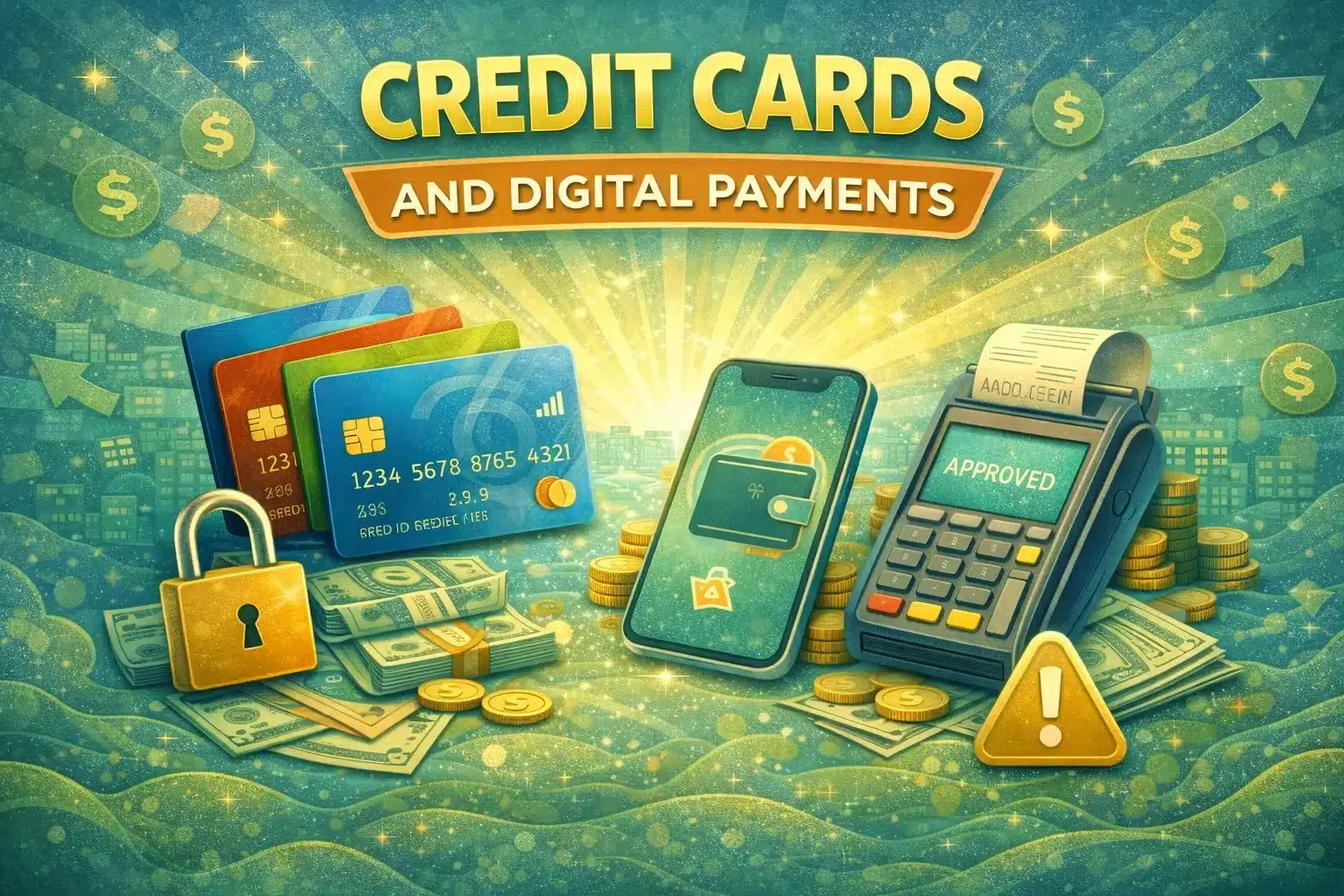
Credit cards and digital payment systems play a central role in modern personal finance. For many people, daily financial activity — from online shopping to recurring subscriptions — depends on card-based and digital payment solutions rather than cash.
Fast Express Money approaches this topic from an independent and educational perspective, focusing on how credit cards and digital payments work, what costs and risks are involved, and how consumers can use these tools responsibly without falling into hidden financial traps.
This hub page serves as a central reference point for understanding payment instruments, their real-world implications, and the broader payment ecosystem.
What Are Credit Cards?
A credit card is a financial tool that allows users to borrow funds from a card issuer up to a predefined limit to make purchases or withdraw cash. Unlike debit cards, credit cards do not immediately deduct money from a bank account.
Key characteristics of credit cards:
- Revolving credit structure
- Monthly statements
- Interest charges on unpaid balances
- Additional fees and conditions
Credit cards combine payment functionality with borrowing, which makes them powerful but potentially risky tools.
How Credit Cards Work in Practice
When a cardholder uses a credit card:
-
The issuer temporarily covers the payment.
-
The transaction appears on the monthly statement.
-
The cardholder can repay:
- The full balance (usually interest-free)
- A minimum amount (with interest applied)
The remaining balance accrues interest until repaid.
Understanding this mechanism is essential to avoid long-term debt accumulation.
Credit Limits and Utilization
Credit limits define the maximum amount a cardholder can borrow. Credit utilization — the percentage of the limit used — directly affects:
- Credit scores
- Future borrowing options
- Interest rate offers
High utilization over time may indicate financial stress rather than convenience.
Interest Rates, APR, and Fees
Credit card costs extend beyond interest rates. Important cost components include:
- Annual Percentage Rate (APR)
- Annual or monthly fees
- Late payment penalties
- Cash advance fees
- Foreign transaction fees
APR provides a more complete picture of borrowing cost than interest rate alone.
Types of Credit Cards
Standard Credit Cards
Basic cards without reward programs.
Rewards and Cashback Cards
Offer points, miles, or cashback based on spending.
Secured Credit Cards
Require a deposit as collateral and are often used to build credit history.
Business and Co-Branded Cards
Designed for specific usage contexts.
Each card type serves different financial goals and risk profiles.
Digital Payments Explained
Digital payments refer to electronic methods of transferring money without physical cash. These include:
- Debit and credit card payments
- Mobile wallets
- Online payment platforms
- Contactless payments
- QR-based systems
Digital payments emphasize speed, convenience, and accessibility.
Mobile Wallets and E-Wallets
E-wallets store payment credentials digitally and allow users to:
- Pay online or in stores
- Transfer money
- Manage multiple cards and accounts
While convenient, e-wallets introduce additional security and data-privacy considerations.
Contactless and Online Payments
Contactless payments use near-field communication (NFC) technology to complete transactions quickly. Online payments rely on secure gateways and authentication protocols.
Benefits include:
- Speed and convenience
- Reduced reliance on cash
- Integration with budgeting tools
However, digital payments also increase exposure to fraud if not managed carefully.
Security and Fraud Risks
Credit cards and digital payments carry specific risks:
- Unauthorized transactions
- Data breaches
- Phishing attacks
- Account takeover
- Subscription abuse
Most systems include consumer protection mechanisms, but responsibility still lies with the user to monitor activity.
Consumer Protection and Chargebacks
One advantage of credit cards is access to chargeback mechanisms, which allow disputed transactions to be reversed under certain conditions.
Consumer protection depends on:
- Issuer policies
- Payment network rules
- Local regulations
Digital wallets may offer additional or alternative dispute resolution processes.
Credit Cards and Credit History
Credit card usage directly affects credit history. Factors include:
- Payment punctuality
- Credit utilization
- Account age
- Frequency of new applications
Responsible card usage can support credit profiles, while mismanagement can cause long-term damage.
Psychological Aspects of Digital Spending
Digital payments reduce the psychological “pain” of spending. Without physical cash, users may:
- Spend more frequently
- Underestimate total expenses
- Accumulate small recurring charges
Awareness of these behavioral effects is crucial for budget management.
Digital Payments and Budget Control
Many digital platforms integrate budgeting features:
- Spending categorization
- Notifications
- Monthly summaries
When used intentionally, digital payments can improve financial awareness rather than undermine it.
Regulation and Compliance
Payment systems are regulated differently across jurisdictions. Regulations may cover:
- Consumer rights
- Data protection
- Anti-fraud measures
- Transparency requirements
Understanding regulatory context helps users assess reliability and accountability.
Articles in This Category
This hub page connects to in-depth educational content such as:
- How credit cards work
- APR vs interest explained
- Digital wallets pros and cons
- Payment security basics
- Managing subscriptions and recurring payments
(Content displayed dynamically.)
Frequently Asked Questions (FAQ)
Are credit cards safer than debit cards?
Do digital payments increase spending?
Is APR the same as interest rate?
Can digital wallets be hacked?
Do credit cards help build credit history?
Conclusion
Credit cards and digital payments offer convenience, flexibility, and access to modern financial systems. However, these tools also introduce borrowing risks, behavioral challenges, and security concerns that require informed use.
Fast Express Money provides independent educational resources to help readers understand payment systems, evaluate risks, and make informed financial decisions without marketing pressure.
</span>
Author

Financial Editor & Credit Analyst
Areas of expertise:
Payday loans and short-term credit
Installment loan structures
APR, fees, and penalties
State-level lending regulations
Borrower risk analysis
Michael Turner is a financial editor and credit analyst specializing in consumer lending in the United States. He has over 8 years of experience analyzing payday loans, installment loans, and alternative credit products.
His work focuses on real borrowing costs, APR calculations, penalties, rollover conditions, and borrower risk scenarios. Michael reviews loan offers across different U.S. states with attention to regulatory disclosures and consumer protection.
Areas of expertise:
Payday loans and short-term credit
Installment loan structures
APR, fees, and penalties
State-level lending regulations
Borrower risk analysis
Language: English
Region focus: United States