


Credit History and Scoring Explained
Contents show
Views: 205
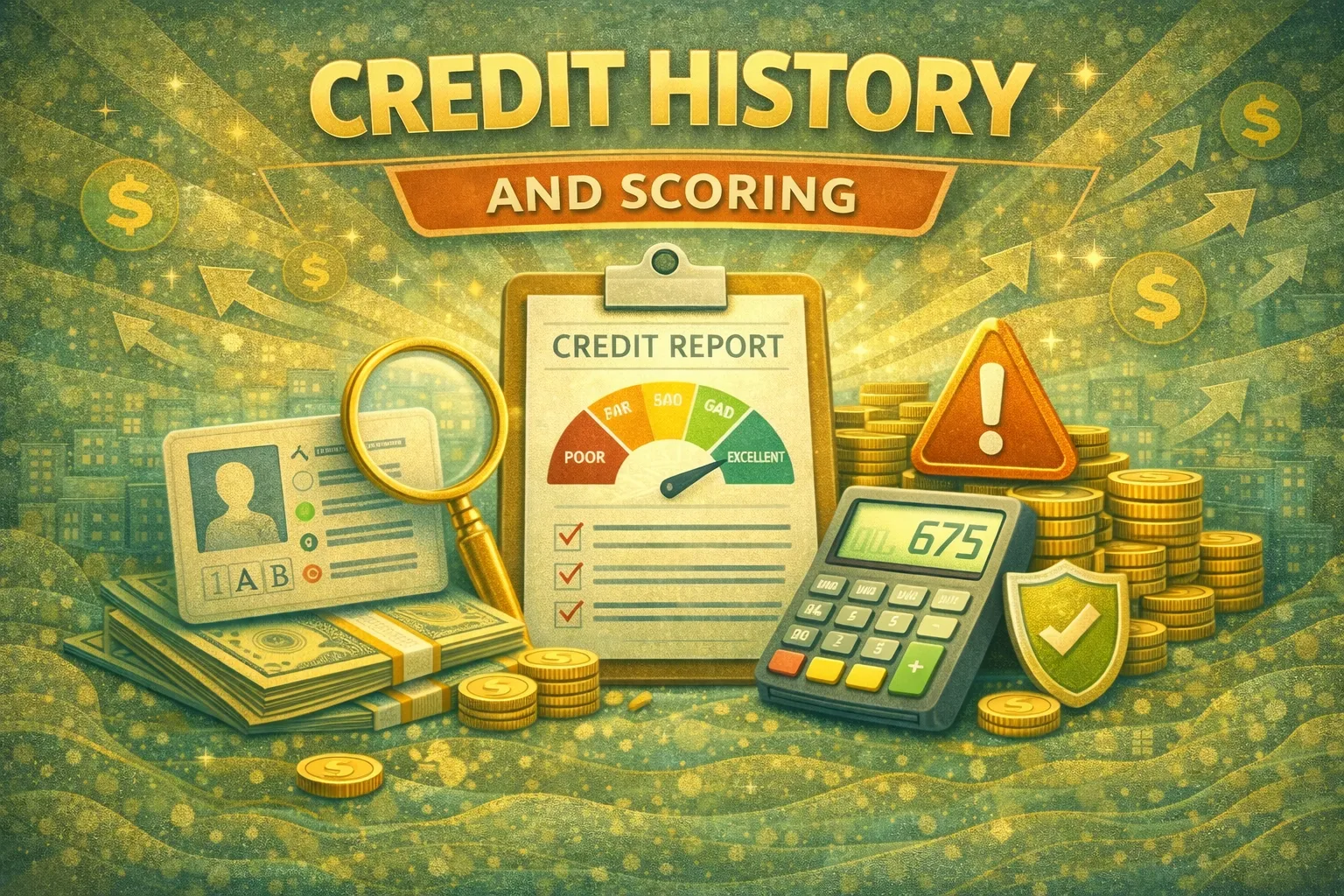
Credit history and credit scoring systems influence a wide range of financial decisions. They affect access to loans, interest rates, installment plans, housing options, and, in some regions, even insurance pricing. Despite their importance, credit scores are often misunderstood, oversimplified, or surrounded by misleading advice.
Fast Express Money approaches credit history from an independent and educational perspective. We do not promote financial products or promise score improvements. Instead, we explain how credit systems function, what factors truly matter, and how individuals can assess their own credit position realistically.
This hub page serves as a foundational resource for understanding credit records, scoring models, and responsible credit behavior.
What Is Credit History?
A credit history is a documented record of how a person has used credit over time. It reflects borrowing behavior, repayment patterns, and interactions with financial institutions.
Typical elements of a credit history include:
- Active and closed loans
- Credit cards and credit limits
- Payment history (on-time, late, or missed payments)
- Defaults, collections, restructurings, or settlements
- Length of credit relationships
- Frequency of credit applications
Credit history does not include personal opinions, lifestyle data, or future intentions. It is a factual record based on past financial actions.
Learn how borrowing activity affects credit records → Loans and Borrowing
What Is a Credit Score?
A credit score is a numerical representation derived from credit history data. Scoring models use statistical methods to estimate the likelihood that a borrower will meet future repayment obligations.
Credit scores are used to:
- Approve or decline loan applications
- Determine interest rates and fees
- Set credit limits
- Assess lending risk
Different lenders may use different scoring models, and the same individual may have multiple scores depending on the source.
A credit score is not a guarantee or judgment.
It is a probability-based assessment built on historical data.
How Credit Scoring Models Work
Although scoring formulas are proprietary, most systems rely on similar categories of information.
1. Payment Behavior
Regular, on-time payments signal reliability. Repeated delays reduce confidence.
2. Credit Utilization
High balances relative to available credit may indicate financial pressure.
3. Length of Credit History
Longer, stable credit relationships tend to reduce perceived risk.
4. Credit Structure
Different types of credit accounts may affect scoring differently.
5. Recent Activity
Frequent new applications or rapid account changes can raise risk flags.
How short-term loans affect scoring → Microfinance and Microloans
Credit History vs. Credit Score
While closely related, credit history and credit score are not the same.
- Credit history is the underlying data.
- Credit score is an interpretation of that data.
Errors in credit history can distort scores, and improvements in behavior may take time to reflect in scoring results.
Common Misunderstandings About Credit Scores
Many credit decisions are influenced by misconceptions rather than facts.
❌ “Income determines credit score”
Income level is not directly included in scoring models.
❌ “Checking your own score lowers it”
Personal credit checks typically do not affect scores.
❌ “Closing old accounts always helps”
Closing accounts may reduce available credit and shorten credit history.
❌ “There are fast score hacks”
Lasting improvements usually require time and consistent behavior.
Credit History Across Different Regions
Credit reporting systems vary by country and jurisdiction. Differences may include:
- Reporting agencies and data sources
- Scoring scales and thresholds
- Data retention periods
- Legal rights for consumers
Some regions emphasize repayment behavior, while others focus more on current debt exposure or credit utilization.
How credit systems differ internationally → International and Cross-Border Finance
How Credit History Affects Financial Access
Credit history can influence:
- Loan approval decisions
- Interest rates and repayment terms
- Credit card eligibility
- Installment plans and financing options
- Insurance pricing in some markets
A limited or damaged credit history does not eliminate all options, but it may restrict terms or require alternative solutions.
Using collateral to manage credit risk → Secured Loans and Collateral Financing
Responsible Credit Management Principles
Maintaining or improving credit history usually depends on a few core practices:
- Paying obligations on time
- Avoiding excessive credit utilization
- Applying for credit only when necessary
- Monitoring credit reports for inaccuracies
- Understanding contract terms before borrowing
There is no universal formula, but consistency plays a key role.
Errors, Disputes, and Credit Report Accuracy
Credit reports can contain inaccuracies due to:
- Data entry mistakes
- Outdated negative records
- Duplicate accounts
- Fraud or identity misuse
Consumers often have the right to:
- Access credit reports
- Dispute incorrect information
- Request corrections
- Add explanatory notes where allowed
Regular monitoring helps reduce long-term impact from incorrect data.
Credit Score vs. Financial Well-Being
A strong credit score does not automatically mean financial stability, just as a low score does not define future outcomes.
True financial health depends on:
- Income consistency
- Emergency savings
- Sustainable debt levels
- Risk awareness
- Long-term planning
Credit is a tool, not a goal in itself.
Building stability beyond credit → Personal Finance and Budget Management
Educational Scope and Transparency
Fast Express Money does not provide lending decisions, credit guarantees, or score manipulation services. All content is informational and designed to improve understanding, not to influence borrowing behavior.
This section focuses on:
- Clear explanations
- Real-world risks
- System transparency
- Informed decision-making
What This Section Covers
This hub page connects to:
- Credit score explanations
- Guides on credit improvement
- Analysis of scoring models
- Common credit mistakes
- Regional credit system overviews
- Credit-related FAQs
It functions as a navigation and knowledge center for all credit-related content on the site.
Frequently Asked Questions (FAQ)
What is the difference between credit history and credit score?
Does a low credit score mean I cannot get any loans?
How long does negative information stay on a credit report?
Does checking my own credit score affect it?
Can credit report errors affect my score?
Does income level affect credit scoring?
Can closing unused credit cards improve my credit score?
How often should I review my credit report?
Do late payments always damage credit history?
Is it possible to rebuild credit history over time?
Conclusion
Credit history and scoring systems shape many financial opportunities, but they should not be viewed as mysterious or absolute. When understood correctly, they become predictable systems governed by clear rules and patterns.
By learning how credit works, individuals can:
- Reduce unnecessary financial risk
- Avoid common mistakes
- Make informed borrowing decisions
- Plan long-term financial strategies
This hub page provides a structured, transparent foundation for navigating credit with confidence and responsibility.
</span>
Author

Financial Editor & Credit Analyst
Areas of expertise:
Payday loans and short-term credit
Installment loan structures
APR, fees, and penalties
State-level lending regulations
Borrower risk analysis
Michael Turner is a financial editor and credit analyst specializing in consumer lending in the United States. He has over 8 years of experience analyzing payday loans, installment loans, and alternative credit products.
His work focuses on real borrowing costs, APR calculations, penalties, rollover conditions, and borrower risk scenarios. Michael reviews loan offers across different U.S. states with attention to regulatory disclosures and consumer protection.
Areas of expertise:
Payday loans and short-term credit
Installment loan structures
APR, fees, and penalties
State-level lending regulations
Borrower risk analysis
Language: English
Region focus: United States