


Insurance and Financial Protection Explained
Contents show
Views: 205
Introduction
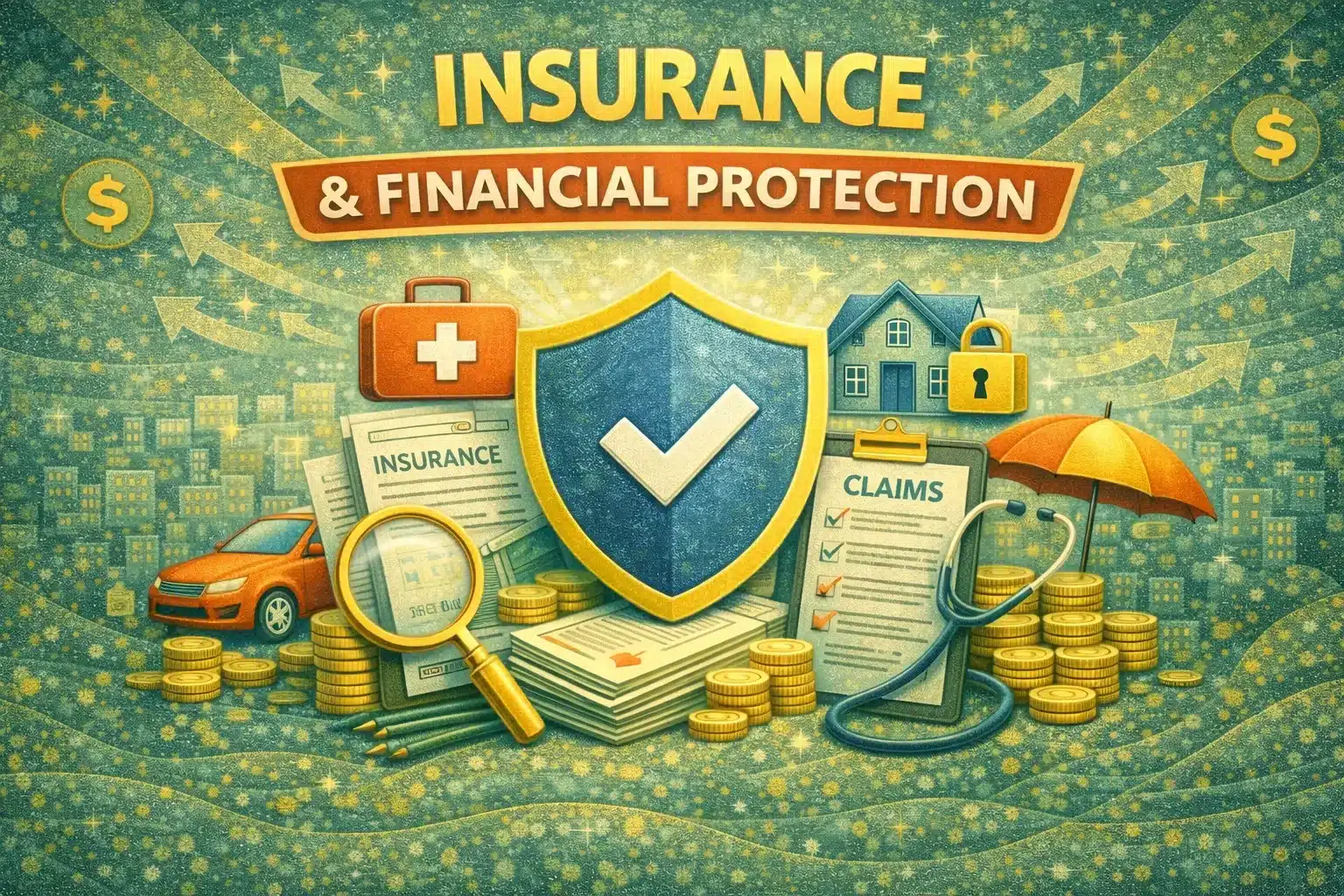
Insurance and financial protection exist to reduce the financial impact of unexpected events. Illness, accidents, property damage, legal disputes, or loss of income can disrupt even well-planned finances. Insurance does not prevent these events, but it can limit their economic consequences.
Despite this, insurance products are often misunderstood. Many people either overestimate coverage or underestimate exclusions, leading to false expectations. Fast Express Money approaches insurance from an independent and educational perspective, focusing on how protection mechanisms work, where they help, and where they do not.
This hub page serves as a foundation for understanding insurance, risk transfer, and financial protection tools.
What Is Insurance?
Insurance is a financial arrangement where risk is transferred from an individual to an insurer in exchange for a premium. The insurer agrees to compensate covered losses under predefined conditions.
Core elements of insurance include:
- Policyholder
- Insurer
- Premium
- Coverage
- Exclusions
- Claims process
Insurance operates on probability, not certainty.
Why Financial Protection Matters
Unexpected events can affect:
- Income stability
- Savings
- Assets
- Long-term plans
- Family security
Financial protection tools help prevent single events from turning into long-term financial crises.
Building emergency funds and stability → Personal Finance and Budget Management
Common Types of Insurance
Health Insurance
Covers medical expenses under defined conditions.
Life Insurance
Provides financial support to beneficiaries after death.
Property Insurance
Protects homes, vehicles, and possessions against damage or loss.
Liability Insurance
Covers legal responsibility toward third parties.
Income Protection and Disability Insurance
Supports income continuity during illness or injury.
Each type addresses different risk categories.
Insurance Premiums and Cost Structure
Insurance pricing depends on:
- Risk profile
- Coverage limits
- Deductibles
- Policy duration
- Claims history
Lower premiums often mean higher deductibles or narrower coverage.
Coverage Limits and Exclusions
Policies clearly define:
- What is covered
- Maximum payout limits
- Situations that are excluded
- Claim conditions
Exclusions are a critical part of insurance contracts and frequently misunderstood.
Insurance vs Savings: Different Roles
Insurance and savings serve different functions:
- Insurance transfers risk
- Savings absorb risk
Relying only on one creates vulnerability.
Risk, savings, and long-term planning → Investments and Savings
Insurance and Loans
Certain loans may require insurance:
- Mortgage insurance
- Vehicle insurance
- Credit protection insurance
While sometimes mandatory, these products should still be evaluated independently.
Loan structures and collateral → Secured Loans and Collateral Financing
Digital Insurance and Insurtech
Technology has changed insurance delivery:
- Online policy management
- Automated claims
- Usage-based pricing
While digital tools improve access, they do not eliminate policy complexity.
Technology in finance explained → Online Finance and Fintech
Psychological Aspects of Insurance Decisions
Insurance decisions are influenced by:
- Fear of loss
- Overconfidence
- Recent negative experiences
- Marketing pressure
Emotional decision-making often leads to over- or under-insurance.
Insurance Regulation and Consumer Protection
Most jurisdictions regulate:
- Licensing of insurers
- Disclosure requirements
- Claims handling standards
- Complaint mechanisms
Regulation increases transparency but does not replace personal due diligence.
Common Insurance Mistakes
Frequent issues include:
- Overlapping policies
- Underinsurance
- Ignoring exclusions
- Choosing lowest price only
- Not updating coverage after life changes
These mistakes can reduce the effectiveness of protection.
Insurance as Part of Financial Planning
Insurance supports:
- Asset preservation
- Family protection
- Business continuity
- Long-term financial stability
It should integrate with budgeting, savings, and investment strategies.
Financial behavior and risk perception → Psychology of Money and Behavioral Finance
Educational Scope and Independence
Fast Express Money does not sell insurance products or provide personalized recommendations. This section is designed to explain systems, risks, and responsibilities in a neutral and transparent way.
Focus areas include:
- Risk awareness
- Policy understanding
- Cost transparency
- Consumer responsibility
Articles in This Category
This hub page connects to:
- Insurance basics guides
- Policy comparison explanations
- Risk assessment articles
- Claims process breakdowns
- Consumer rights content
(Content displayed dynamically.)
Frequently Asked Questions (FAQ)
Does insurance guarantee full compensation?
Is insurance always necessary?
Can insurance replace emergency savings?
Are exclusions legally binding?
Should insurance be reviewed regularly?
Conclusion
Insurance and financial protection play a critical role in managing uncertainty, but they are not universal solutions. Understanding how insurance works, where its limits lie, and how it fits into a broader financial strategy helps individuals protect themselves without unnecessary cost or false expectations.
This hub page provides an independent framework for approaching insurance with clarity, realism, and responsibility.
Author

Financial Editor & Credit Analyst
Areas of expertise:
Payday loans and short-term credit
Installment loan structures
APR, fees, and penalties
State-level lending regulations
Borrower risk analysis
Michael Turner is a financial editor and credit analyst specializing in consumer lending in the United States. He has over 8 years of experience analyzing payday loans, installment loans, and alternative credit products.
His work focuses on real borrowing costs, APR calculations, penalties, rollover conditions, and borrower risk scenarios. Michael reviews loan offers across different U.S. states with attention to regulatory disclosures and consumer protection.
Areas of expertise:
Payday loans and short-term credit
Installment loan structures
APR, fees, and penalties
State-level lending regulations
Borrower risk analysis
Language: English
Region focus: United States