


Online Finance and Fintech Explained
Contents show
Views: 207
Introduction
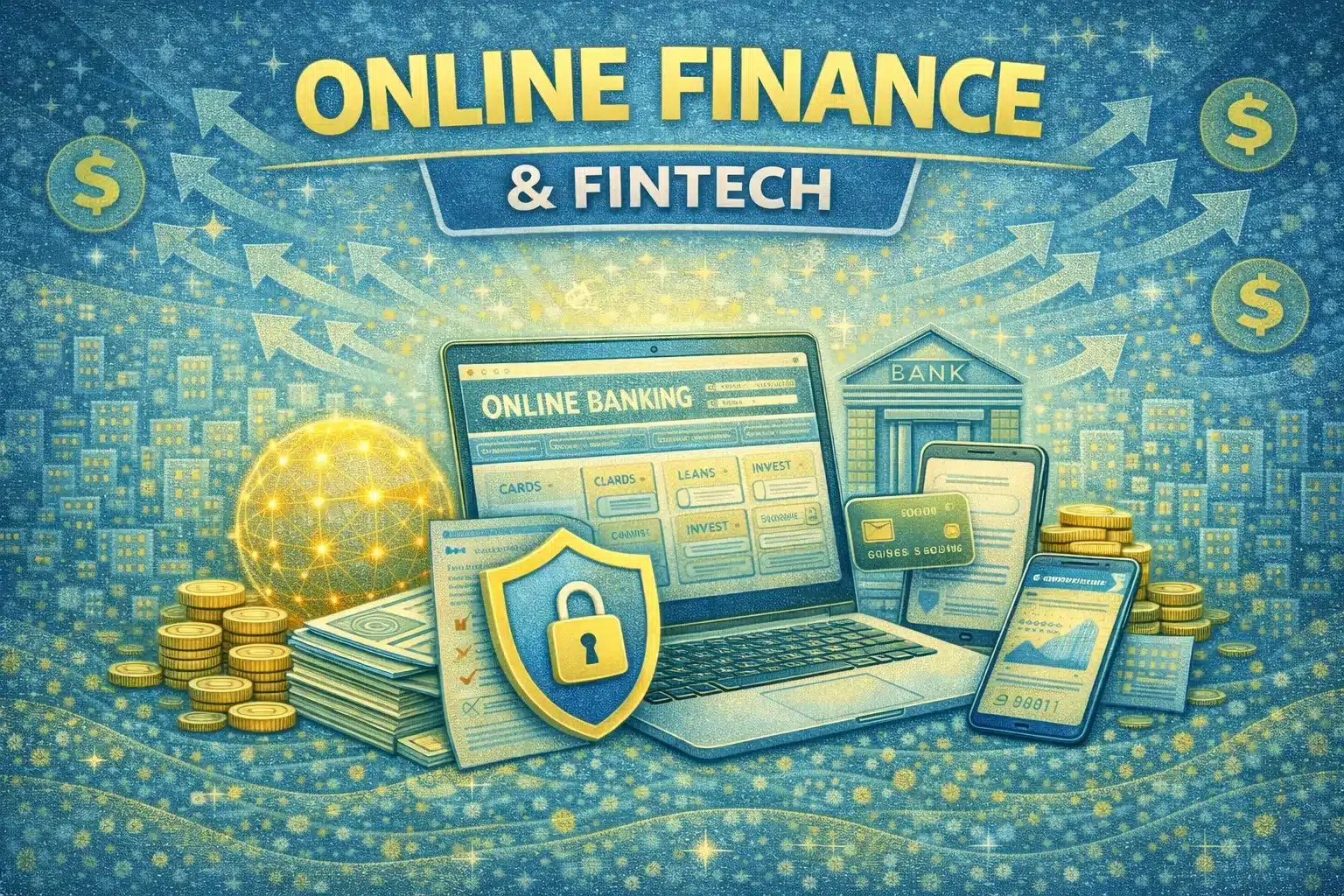
Online finance and fintech have transformed how people interact with money. Payments, loans, investments, insurance, and even banking services are increasingly delivered through digital platforms rather than physical branches.
While fintech solutions promise speed, accessibility, and convenience, they also introduce new risks related to data security, regulation, transparency, and consumer protection. Fast Express Money examines online finance from an independent and educational perspective — focusing on how digital financial systems work, what trade-offs they involve, and how users can navigate them responsibly.
This hub page provides a structured overview of fintech and online financial services as part of modern personal finance.
What Is Online Finance?
Online finance refers to financial services delivered primarily through digital channels. These services may include:
- Digital banking
- Online payments
- Mobile wallets
- Online lending platforms
- Investment and savings apps
- Digital insurance services
Online finance often relies on internet connectivity, mobile devices, and automated systems.
What Is Fintech?
Fintech (financial technology) describes companies and platforms that use technology to deliver financial services more efficiently or differently than traditional institutions.
Fintech solutions may focus on:
- Speed and automation
- User-friendly interfaces
- Lower operational costs
- Alternative data usage
However, fintech companies may differ significantly in regulation and consumer protection compared to traditional banks.
How Fintech Differs from Traditional Finance
Key differences often include:
- Digital-only onboarding
- Reduced physical presence
- Faster processing
- Different risk assessment models
While fintech can improve accessibility, it may also shift responsibility toward the user.
How traditional banking works → Banking, Payments and Accounts
Common Types of Fintech Services
Digital Payments and Wallets
Enable online and contactless transactions without physical cash.
Online Lending Platforms
Offer loans using automated approval systems and alternative data.
Investment and Savings Apps
Provide simplified access to financial markets and savings tools.
Insurtech
Delivers insurance products and claims processing digitally.
Personal Finance Tools
Help track spending, budgeting, and financial goals.
Each category introduces specific risks and benefits.
Benefits of Online Finance
Potential advantages include:
- Faster access to services
- Lower entry barriers
- Increased financial inclusion
- Improved user experience
- Transparent interfaces
These benefits are most effective when users understand underlying mechanics.
Risks and Limitations of Fintech
Digital finance introduces risks such as:
- Data breaches and privacy loss
- Platform failures
- Regulatory gaps
- Algorithmic decision errors
- Overreliance on automation
Risk management remains essential in digital environments.
Regulation and Consumer Protection in Fintech
Fintech regulation varies by country and service type. Some platforms operate under full financial licenses, while others function under limited or alternative frameworks.
Regulatory differences may affect:
- Deposit protection
- Dispute resolution
- Transparency requirements
- Data handling standards
Understanding regulatory status helps assess risk exposure.
Fintech and Credit Decisions
Some fintech lenders use alternative data sources:
- Transaction history
- Digital behavior
- Platform activity
While this may improve access, it can also reduce transparency in credit decisions.
How credit systems work → Credit History and Scoring
Digital Finance and Financial Behavior
Online finance affects behavior by:
- Reducing friction in spending
- Encouraging frequent transactions
- Increasing subscription usage
- Accelerating borrowing decisions
Behavioral awareness helps prevent overuse or misuse.
Online Finance and Security
Security measures may include:
- Encryption
- Two-factor authentication
- Biometric verification
- Transaction monitoring
However, social engineering and phishing remain major threats.
Fintech and Financial Inclusion
Fintech can improve access for:
- Underbanked populations
- Remote users
- Small businesses
- Gig economy workers
At the same time, digital exclusion can affect those without access to technology or digital literacy.
Online Finance as Part of Financial Planning
Digital tools can support:
- Budgeting
- Savings automation
- Payment tracking
- Goal setting
They should complement, not replace, core financial planning principles.
Planning and budgeting fundamentals → Personal Finance and Budget Management
Educational Scope and Independence
Fast Express Money does not operate fintech platforms or sell digital financial products. This section provides neutral explanations designed to help users understand systems, risks, and responsibilities.
Our focus includes:
- Transparency
- Risk awareness
- Informed usage
- Consumer responsibility
Articles in This Category
This hub page connects to:
- Fintech platform explainers
- Online lending analysis
- Digital wallet guides
- Security and fraud prevention content
- Regulatory overviews
(Content displayed dynamically.)
Frequently Asked Questions (FAQ)
Is fintech safer than traditional banking?
Are fintech platforms regulated?
Can fintech replace banks?
Are online loans riskier?
Do fintech apps protect user data?
Conclusion
Online finance and fintech have reshaped the financial landscape by improving accessibility and efficiency. However, digital systems do not remove financial risk — they change how it appears and how quickly decisions are made.
Understanding how fintech works helps users:
- Use digital services responsibly
- Recognize limitations and risks
- Avoid false assumptions about safety or guarantees
This hub page provides a structured foundation for navigating online finance with awareness and realism.
Author

Financial Editor & Credit Analyst
Areas of expertise:
Payday loans and short-term credit
Installment loan structures
APR, fees, and penalties
State-level lending regulations
Borrower risk analysis
Michael Turner is a financial editor and credit analyst specializing in consumer lending in the United States. He has over 8 years of experience analyzing payday loans, installment loans, and alternative credit products.
His work focuses on real borrowing costs, APR calculations, penalties, rollover conditions, and borrower risk scenarios. Michael reviews loan offers across different U.S. states with attention to regulatory disclosures and consumer protection.
Areas of expertise:
Payday loans and short-term credit
Installment loan structures
APR, fees, and penalties
State-level lending regulations
Borrower risk analysis
Language: English
Region focus: United States