


Secured Loans and Collateral Financing Explained
Contents show
Views: 209
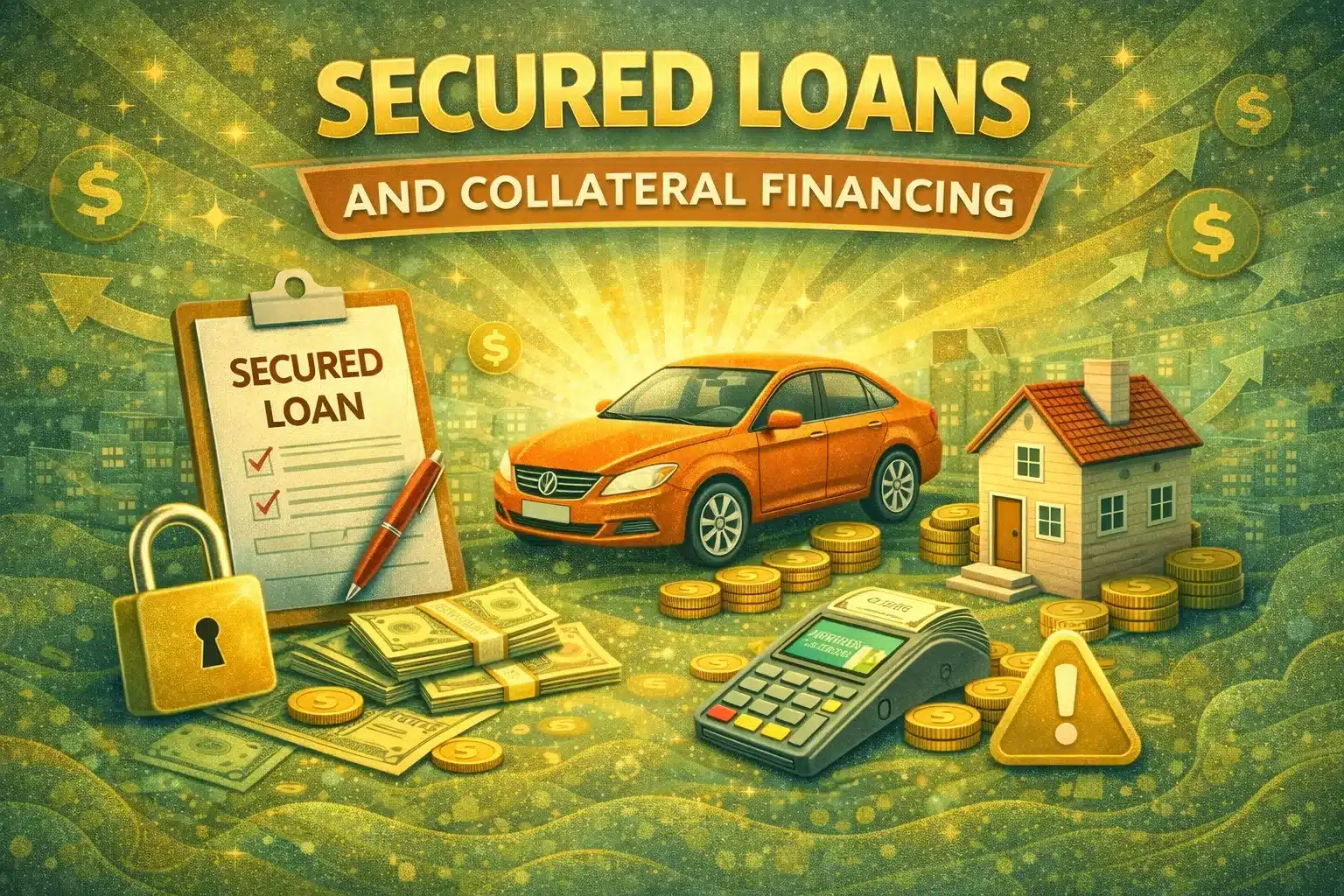
Secured loans and collateral financing represent a category of borrowing in which a borrower pledges an asset to secure a loan. These financial products are widely used across personal, business, and housing finance, offering access to credit under conditions that differ significantly from unsecured borrowing.
Fast Express Money analyzes secured loans from an independent and educational perspective, focusing on how collateral-based financing works, what risks it introduces, and how borrowers can assess whether pledging assets is an appropriate financial decision.
This hub page serves as a central reference point for understanding secured lending and navigating related educational content within the broader personal finance ecosystem.
What Is a Secured Loan?
A secured loan is a loan backed by collateral — an asset that the lender can claim if the borrower fails to meet repayment obligations. Common forms of collateral include vehicles, real estate, savings accounts, or other valuable property.
The presence of collateral reduces lender risk, which often results in:
- Lower interest rates
- Higher borrowing limits
- Longer repayment terms
However, reduced lender risk increases borrower exposure, as failure to repay can lead to loss of the pledged asset.
How Collateral Financing Works
In collateral financing, the borrowing process typically involves:
- Asset valuation
- Loan approval based on collateral value and borrower profile
- Loan disbursement
- Repayment over an agreed term
- Release of collateral upon full repayment
The loan amount is often limited by a loan-to-value (LTV) ratio, which determines how much of the asset’s value can be borrowed.
Types of Secured Loans
Auto Loans
Loans secured by vehicles, commonly used for purchasing or refinancing cars.
Home Equity Loans and HELOCs
Loans secured by residential property, allowing homeowners to borrow against equity.
Pawn and Asset-Backed Loans
Short-term loans secured by physical assets such as jewelry or electronics.
Savings-Secured Loans
Loans backed by savings deposits, often used to build credit history.
Business Collateral Loans
Loans secured by equipment, inventory, or receivables.
Each type carries different legal, financial, and practical implications.
Collateral Valuation and Loan-to-Value (LTV)
Collateral valuation determines how much lenders are willing to lend. LTV ratios vary by asset type and market conditions.
Lower LTV ratios:
- Reduce lender risk
- Increase borrower safety margin
- Lower probability of asset loss
Higher LTV ratios increase borrowing capacity but significantly raise risk exposure.
Interest Rates and Costs
Secured loans typically offer lower interest rates than unsecured loans, but cost considerations extend beyond rates.
Borrowers should evaluate:
- Interest rates and APR
- Origination fees
- Valuation and appraisal fees
- Storage or insurance costs
- Penalties for late payment or early repayment
A lower rate does not always mean a lower total cost.
Risks of Secured Borrowing
Secured loans involve unique risks that differ from unsecured borrowing:
- Loss of collateral due to default
- Forced asset liquidation
- Long-term financial disruption
- Legal and administrative costs
- Reduced financial flexibility
Borrowers must consider worst-case scenarios before pledging essential assets.
Secured vs Unsecured Loans
The primary difference lies in risk distribution:
- Unsecured loans expose lenders to higher risk
- Secured loans transfer significant risk to borrowers
While secured loans may appear more affordable, they can be more dangerous if repayment capacity changes.
When Secured Loans May Be Appropriate
Secured loans may be suitable when:
- Borrowing is for long-term, essential purposes
- Income stability is strong
- The collateral is not critical for daily life
- Loan terms are fully understood
They are generally unsuitable for covering recurring expenses or short-term cash gaps.
Collateral Loss and Default Consequences
Defaulting on a secured loan may result in:
- Asset seizure
- Credit score damage
- Additional legal costs
- Loss of housing or transportation
The consequences often extend beyond the immediate financial loss.
Regulatory and Consumer Protection Considerations
Secured lending is regulated differently depending on jurisdiction and asset type. Regulations may address:
- Repossession procedures
- Borrower notification requirements
- Valuation standards
- Consumer rights
Understanding regulatory context helps borrowers assess legal exposure.
Psychological Aspects of Collateral Financing
Collateral financing introduces emotional factors:
- Stress related to asset loss risk
- Pressure to prioritize repayment over essentials
- Reduced sense of financial security
These psychological effects should not be underestimated.
Secured Loans and Long-Term Financial Planning
Collateral-based borrowing affects:
- Asset ownership
- Retirement planning
- Mobility and flexibility
- Intergenerational wealth transfer
Borrowers should consider how secured debt aligns with long-term financial goals.
Articles in This Category
This hub connects to in-depth content such as:
- How secured loans work
- Auto loans explained
- Home equity risks
- Loan-to-value ratios
- Asset-backed borrowing mistakes
(Content displayed dynamically.)
<h2>Frequently Asked Questions (FAQ)</h2>
Are secured loans safer than unsecured loans?
What happens if I miss payments on a secured loan?
Can secured loans improve credit history?
Is collateral always required?
Should essential assets be used as collateral?
Conclusion
Secured loans and collateral financing provide access to credit under conditions that can be both beneficial and risky. While lower interest rates and higher limits may appear attractive, the potential loss of assets requires careful consideration.
Fast Express Money presents secured lending as a financial tool that should be used cautiously, transparently, and with full awareness of long-term consequences.
</span>
Author

Financial Editor & Credit Analyst
Areas of expertise:
Payday loans and short-term credit
Installment loan structures
APR, fees, and penalties
State-level lending regulations
Borrower risk analysis
Michael Turner is a financial editor and credit analyst specializing in consumer lending in the United States. He has over 8 years of experience analyzing payday loans, installment loans, and alternative credit products.
His work focuses on real borrowing costs, APR calculations, penalties, rollover conditions, and borrower risk scenarios. Michael reviews loan offers across different U.S. states with attention to regulatory disclosures and consumer protection.
Areas of expertise:
Payday loans and short-term credit
Installment loan structures
APR, fees, and penalties
State-level lending regulations
Borrower risk analysis
Language: English
Region focus: United States